


Roofing Sheets
High-quality roofing sheet manufacturing and installation for industrial and commercial structures.

Our quality defines us
Established in 2003 in Rajkot, Gujarat, we expanded with a second manufacturing unit BALAJI ROOFING INDUSTRIES in Uttarshiv, Navi Mumbai, in 2018. Today, as a leading manufacturing authority in with manufacturing plants in Mumbai, Rajkot, and Lucknow, we have become a one-stop solution for Roofing Sheets, Pre-Engineered Buildings, and Architectural products and services. Backed by advanced technology, skilled expertise, and a strong commitment to quality, we consistently deliver reliable, high-performance solutions.
Over two decades of expertise in roofing sheets, pre-engineered buildings, and architectural solutions, delivering consistent quality across industrial and commercial projects.
State-of-the-art manufacturing units strategically set up to ensure high production capacity, strict quality control, and timely project delivery.
Operational presence across key locations in India, enabling faster service, efficient logistics, and reliable support for projects nationwide.
Comprehensive roofing solutions tailored to your needs.
High-quality roofing sheet manufacturing and installation for industrial and commercial structures.
Pre-Engineered Building solutions designed for durability, efficiency, and large-scale industrial applications.
Custom architectural solutions and products that combine aesthetics with structural strength.
A selection of what we manufacture. Browse a full range or jump straight to a product.
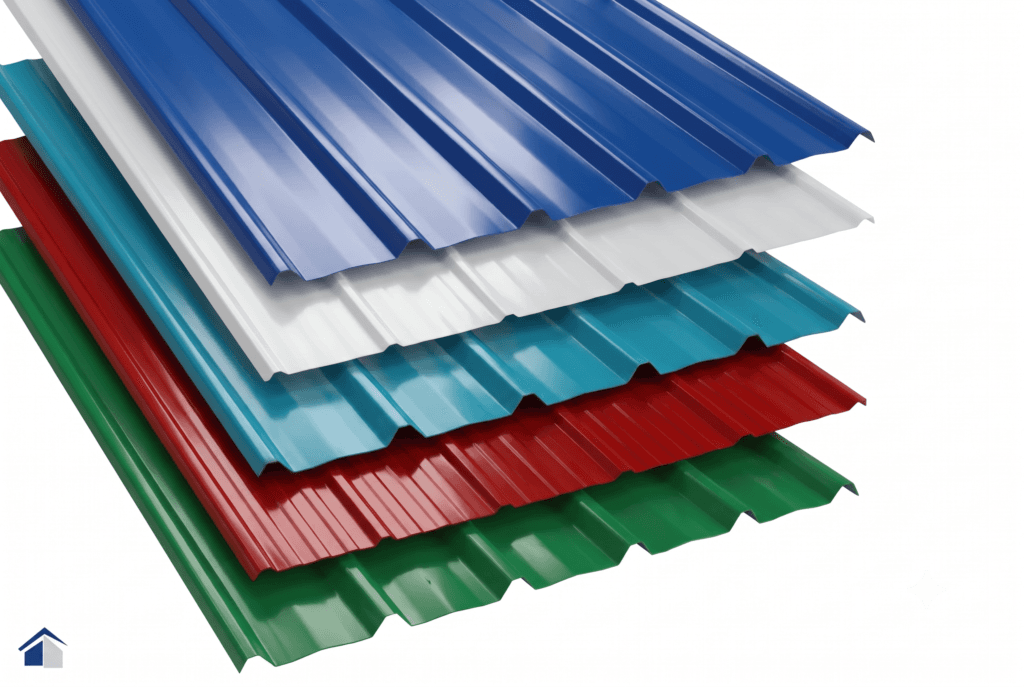
Colour Coated Roofing Sheets are high-quality metal sheets coated with protective paint layers that provide excellent corrosion resistance, durability, and an attractive finish. Manufactured using premium PPGI and PPGL steel, these sheets are ideal for industrial, commercial, and residential roofing applications. They offer long service life, weather resistance, and low maintenance while enhancing the overall appearance of the structure.
View product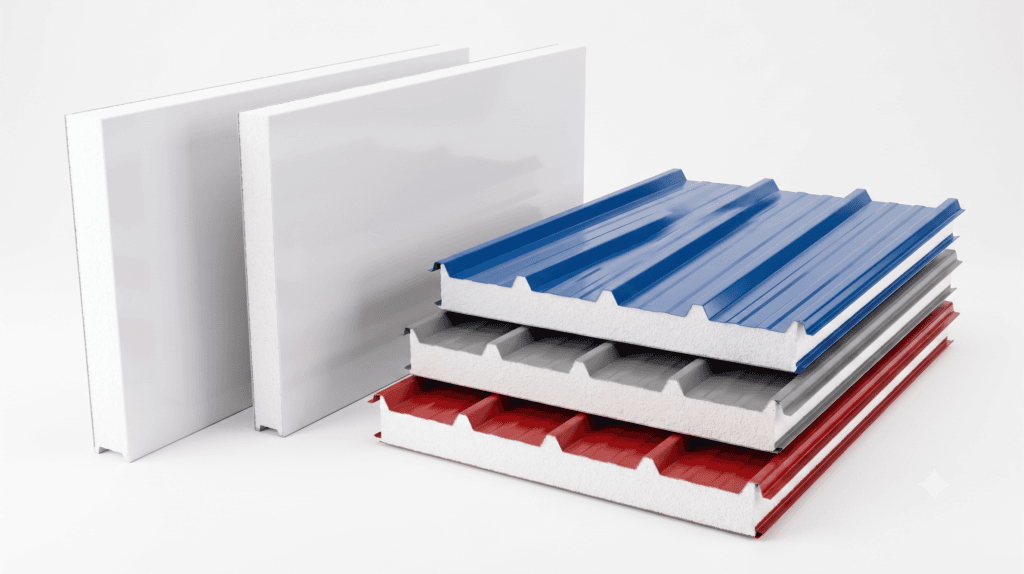
Insulation built into the panel A PUF panel is a factory made sandwich: two metal skins with a rigid polyurethane foam core bonded between them. The foam is not a filler. Once bonded, the assembly acts structurally as one piece, so the panel spans further than either skin could alone while doing the insulation work at the same time. That combination is why PUF panels dominate cold storage. One product gives structure, weather skin, vapour barrier and insulation, and it arrives finished. Building the same performance up in layers on site takes longer and leaves more places for a gap. These are also sold as sandwich panels, composite panels, polyurethane sheet, PU sheets, foam sheet and double layer sheet. Roof and wall panels PUF roof panels are profiled on the outer skin to shed water and lapped so the joint sits above the water line. PUF wall panels are usually flat or lightly profiled with a concealed joint, because a wall does not need to drain and a clean face is worth more. Both use the same core; the difference is the skin and the joint. Continuous PUF panels are made on a continuous line rather than pressed in discrete lengths. The process gives more consistent core density along the panel, which matters on long runs where a variable core would show as variable performance. PUF, PIR and EPS These get used interchangeably in conversation and they are not the same. PUF is polyurethane foam. It has excellent insulation value per millimetre, which is why it is the default for cold rooms where every millimetre of wall thickness is floor area lost. PIR is polyisocyanurate, a close relative made with a modified chemistry that gives it better behaviour when exposed to fire. Where fire performance is being specified rather than assumed, PIR is usually the panel being asked for. EPS is expanded polystyrene: the familiar bead foam. It insulates less well per millimetre, so an EPS panel must be thicker for the same result, but it costs less and is entirely adequate for a partition or a non-refrigerated building. The honest summary is that PUF and PIR buy thinner walls and better performance, EPS buys a lower price. Which is right depends on whether the wall thickness or the invoice matters more on that job. Cold storage and thermal insulation For cold storage panels the specification is driven by the temperature difference between inside and outside and by how continuously it runs. A chiller at a few degrees above zero and a freezer well below it are different problems, and the freezer needs considerably more core thickness. The detail that decides whether a cold room performs is the joint. Panels lock together with a tongue and groove and a cam lock, and that joint has to be continuous and sealed. A thermal bridge at a joint or at a corner does not just leak a little cold; it condenses moisture, and over time water in the joint destroys the panel from inside. Corners, door frames and floor junctions are where this shows up first. Heat resistant panels in hot process areas work the same way in reverse, keeping heat out of a controlled space rather than cold in. What goes wrong Core density is the number to ask about, and it is the one most easily reduced to hit a price. A lower density core insulates less and, more importantly, is weaker, so the panel spans less and dents more easily during handling. Skin thickness is the second. A very thin outer skin oil-cans visibly on a flat wall panel and dents from ordinary knocks in a working building. Site damage is the third, and it is the most common of all. A crushed edge is a permanent thermal bridge, and once panels are installed and sealed you cannot inspect the core. Panels should be lifted rather than dragged and stored flat and dry before fixing. Sending an enquiry The most useful information is the internal temperature you need to hold, the external conditions, the panel areas for roof and wall separately, and the span between supports. If it is cold storage, tell us the running temperature rather than the room’s name, because chiller and freezer specifications differ substantially. We will come back with core type and thickness to suit rather than defaulting to the thickest option.
Browse category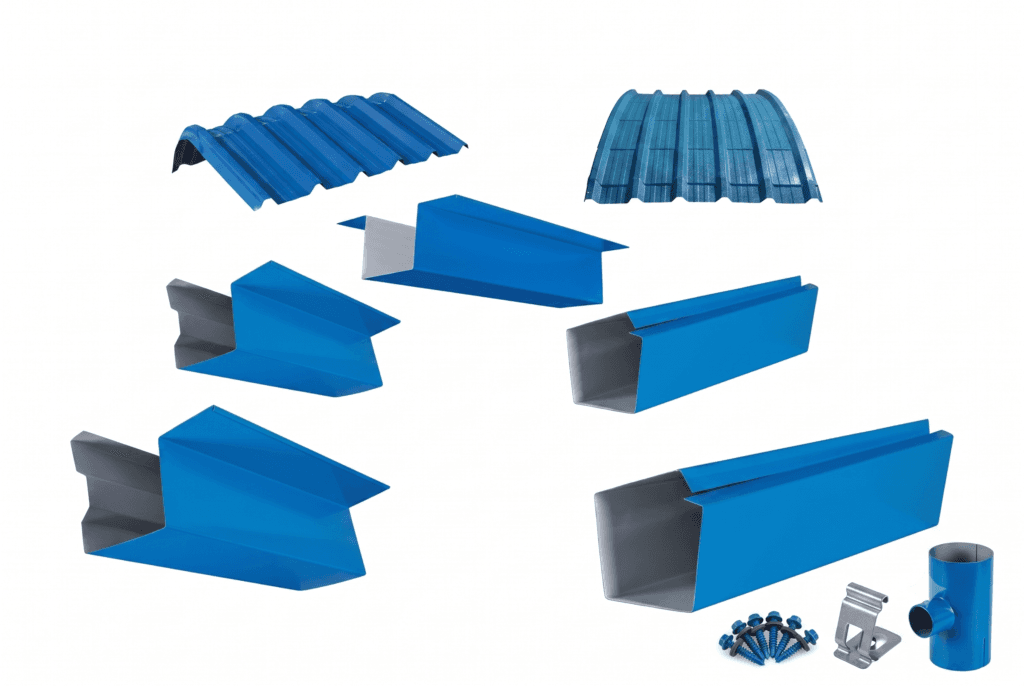
The parts that make a roof watertight Sheets cover the middle of a roof. Everything else is done by the accessories, and almost every leak on an otherwise sound roof starts at one of them. Ridges, flashings, gutters and fasteners are where water is redirected, where two planes meet, and where the roof is penetrated. Those are the three places water gets in. We fabricate and supply the full range in the same coating and colour as the roof sheets, which matters more than it sounds. Accessories ordered separately from a different supplier arrive in a different shade and a different coating grade, and the lower grade corrodes first. Ridge and flashings The profile ridge closes the apex where two roof slopes meet, pressed to match the sheet profile so it sits down on the corrugation instead of bridging it. A plain flat ridge over a profiled sheet leaves gaps at every rib, which is where wind driven rain and birds get in. Flashing is the general term for a folded sheet that closes a junction. Each type has a job. L flashing closes a simple right angle. Apron flashing covers the joint where a roof meets a vertical wall. Gable flashing and barge board finish the sloping edge at the end of the building, and also stop wind lifting the edge sheet. Canopy flashing weathers the junction over a projecting canopy. Drip flashing throws water clear of the wall face instead of letting it run back down it. Corner pieces and bending sheet cover the ad hoc junctions every real building throws up. We bend to the angle needed rather than forcing a stock profile into a joint it does not fit. Rainwater goods Eaves gutter catches water at the bottom of the slope, and is asked for locally as parnali or nali. The downtake pipe or downspout takes it to ground. The two most common faults are undersizing and underfalling. A gutter too small for the roof area overflows in heavy rain and sends water down the wall, and a gutter laid dead level holds standing water, silt and eventually plant growth. Gutter size should follow the roof area draining into it and the rainfall the location actually sees. A monsoon region needs more capacity than a rainfall average suggests, because what matters is the intensity of the worst hour, not the annual total. Dhapa covers the closure and capping pieces that finish an edge or a joint neatly and keep water and birds out of the void. Crimped and curved work Crimping compresses one edge of a profiled sheet so it can be curved. A crimping sheet or crimp curved sheet forms the arch on a curved roof, a canopy or a barrel vault without cutting and joining. Because the sheet stays continuous over the curve there are no laps along the run, which removes the leak points a faceted roof would have. Screws and fasteners The cheapest item on the roof decides how long the rest of it lasts. Self drilling screws fix through the sheet into the purlin in one operation. What matters is the washer and the coating. A bonded EPDM washer seals the hole; a plain washer does not, and the hole then leaks for the life of the building. Coating grade has to match the sheet. Put an ordinary zinc plated screw into a galvalume or aluminium roof and the two metals react. Rust blooms around every fixing and streaks down the sheet, and the roof looks a decade older than it is within a couple of seasons. Fixing position matters too. Screws go through the crown of the rib on most profiles, not the valley, so the fixing sits above the water path rather than in it. Why order accessories with the sheets Colour is batch dependent. Accessories rolled from the same coil as the roof match; accessories bought later from a different batch rarely do, and on a visible elevation the difference shows. Ordering together also means the coating grade is consistent across the whole roof, so nothing on it is a weak point waiting to corrode first. What to send us A drawing is ideal. Failing that, the roof area, the sheet profile and colour, the total length of ridge and eaves, the number of gable ends, and any junctions against walls or canopies. Photographs of the awkward corners are genuinely useful, because those are the pieces that have to be made to fit rather than picked off a list.
Browse categoryStrategically located manufacturing facilities across India.
One of the few roofing manufacturers in India with its own units across three states.





Contact us today for a free consultation and quotation
