


Ventilators & Louvers
Updated
Louvers
Louvers
Louvers are ventilation components designed to allow controlled airflow while preventing the entry of rain, dust, and debris. Used in industrial, commercial, and architectural applications, louvers help improve ventilation efficiency and airflow management. They are suitable for walls, windows, and ventilation openings in various building types.
View DetailsRidge Ventilators
Ridge Ventilators
Ridge Ventilators are continuous ventilation systems installed along the roof ridge to allow hot air to escape naturally from the building. They provide uniform airflow without the need for electrical power, helping regulate indoor temperature and improve ventilation efficiency. Ridge ventilators are ideal for large industrial sheds and commercial roofing structures.
View Details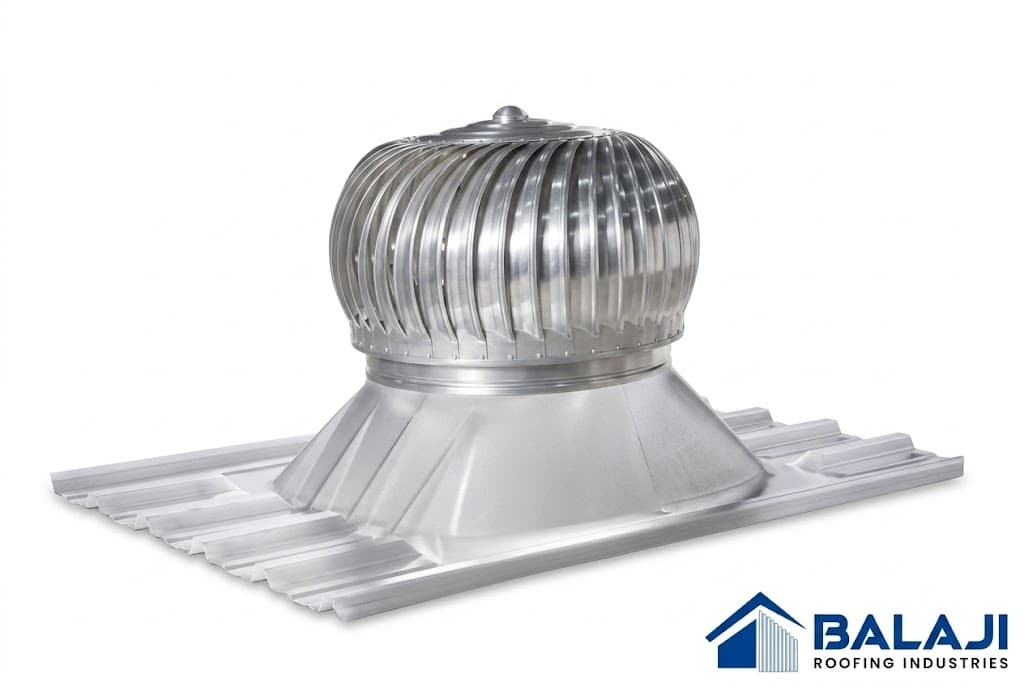
Ventilator Fan
Ventilator Fan
Ventilator Fans are roof-mounted ventilation units designed to improve air circulation and remove heat, fumes, and moisture from industrial and commercial buildings. These fans operate efficiently to maintain indoor air quality while reducing heat buildup within the structure. Ventilator fans are suitable for factories, warehouses, workshops, and large covered spaces.
View Details
About Ventilators & Louvers
Moving hot air out of a building
Hot air rises and collects at the ridge. If it has nowhere to go it sits there and pushes the temperature at working level up with it, along with fumes, moisture and dust. Roof ventilation gives that air an exit and pulls cooler air in low down to replace it. Done properly it runs continuously on stack effect and wind, with no power and no maintenance schedule.
This is usually the cheapest temperature improvement available on an existing shed, and it is often specified alongside insulation rather than instead of it.
What we supply
Turbo air ventilators are the spinning wind driven units seen along factory ridges, also called turbo fans, turbine ventilators or simply fans. Wind and rising air spin the turbine, which draws air out of the building. They use no electricity and have no wiring to fail. Aluminium units are lighter and do not rust; the base is made to suit the roof profile so the flashing sits flat.
Ridge ventilators, also known as continuous ridge vents, roof monitors or gravent, run along the length of the ridge rather than sitting as individual units. Because the opening is continuous, extraction is spread evenly down the building instead of concentrating at a few points. They suit long production halls where even conditions matter.
Louvers are angled blade panels fitted into walls and gable ends. They let air pass while keeping direct rain out, and they are how replacement air gets into the building at low level. Available as metal louvers, colour coated louvers to match the cladding, and polycarbonate louvers where daylight through the opening is also wanted. Window louvers and ventilation windows are the same product in a smaller opening.
Ventilators and louvers work as a pair
This is the most common mistake in shed ventilation. Extractors at the ridge with no inlet at low level cannot move much air, because pulling air out of a sealed box only creates negative pressure. The turbines keep spinning and very little changes inside.
Inlet area at low level should be at least equal to the extract area at the ridge. Louvers in the side walls or gables are the usual way to provide it. Get that balance right and modest extraction works well; get it wrong and no amount of ridge hardware helps.
How many units
The number depends on the volume of the building, the height difference between inlet and outlet, and how much heat the process inside generates. A tall building ventilates more readily than a low one of the same floor area because the stack effect is stronger. A foundry or a forging shop needs far more extraction than a dry goods warehouse of identical size.
Spacing matters as much as quantity. Units spread evenly along the ridge outperform the same number clustered at one end, because dead zones form wherever there is no local extraction.
Rain, birds and maintenance
Properly made units have a cowl and base designed so water cannot track back in, and the base flashing must match the roof profile rather than being packed with sealant. Bird mesh is worth fitting at the outset. Retrofitting mesh means going back onto the roof.
Turbine bearings are the only moving part. Sealed bearings run for years without attention; cheaper units seize and then sit there looking like ventilation while doing none.
What to send us
Give us the building length, width and eaves height, the roof profile, what happens inside, and whether wall louvers already exist. If you are adding to an existing building, say whether the roof is metal, UPVC or asbestos, because the base and flashing differ.
Enquire about Ventilators & Louvers
Tell us the sizes and quantities you need. We will reply on WhatsApp.
Prefer to talk? +91 8008080609